









Reputation used to feel like a soft metric marketing teams tracked separately from sales. That thinking no longer holds up. Digital reputation now shows up directly in revenue numbers, not just brand perception surveys.
Why Digital Reputation Shows Up in Revenue Numbers
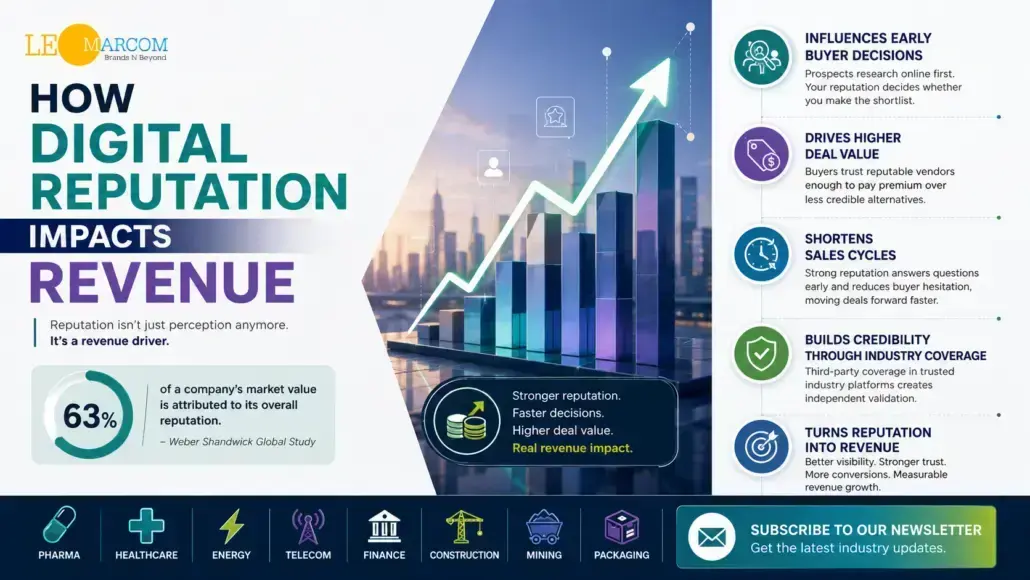
According to a Weber Shandwick global study, executives attribute an average of 63% of a company’s market value to its overall reputation. That figure applies to public companies, but the underlying logic reaches private B2B brands too. Buyers research vendors online long before any sales conversation begins.
Online brand reputation shapes that early research heavily. A prospect who finds thin, dated or negative information often removes a vendor from consideration entirely. Consequently, lost deals sometimes happen before a sales team even knows a prospect existed.
How Online Brand Reputation Influences Deal Size
A strong reputation affects more than whether a buyer picks your brand. It also influences how much they are willing to pay. Buyers trust well-regarded vendors enough to accept premium pricing over cheaper, less credible alternatives.
Strong online brand reputation reduces buyer hesitation throughout the sales cycle. Procurement teams move faster when public information already answers their questions. Therefore, reputation can shorten sales cycles as much as it increases deal value.
Building Digital Reputation Through Industry Credibility
A pharma company featured on worldpharmatoday.com strengthens its standing among regulators and buyers simultaneously. Similarly, a hospital brand covered on hhmglobal.com builds credibility that supports higher-value contracts.
The same pattern holds elsewhere. A finance firm featured on worldfinanceinforms.com or an energy company covered on powerinfotoday.com protects and grows its digital reputation through consistent, credible coverage.
Turning Reputation Into Measurable Revenue
Telecom brands can strengthen this position through teleinfotoday.com, while construction firms build it via worldconstructiontoday.com. Mining and packaging companies gain similar advantages through miningfrontier.com and packagingworldinsights.com.
Start by auditing what buyers actually find when they search your brand. Next, address gaps with credible, well-placed industry coverage. Additionally, track how reputation-driven visibility correlates with deal velocity over time.
Conclusion
Digital reputation no longer sits apart from revenue performance. It shapes who considers your brand, how quickly they decide and what they are willing to pay. Treating reputation as a revenue driver, not a soft metric, changes how marketing gets measured.
At Leo MarCom, we help pharma, healthcare, energy, telecom, finance, construction, mining and packaging brands build the digital reputation and online brand reputation that convert directly into revenue. Subscribe to our newsletter to get the latest industry updates.