







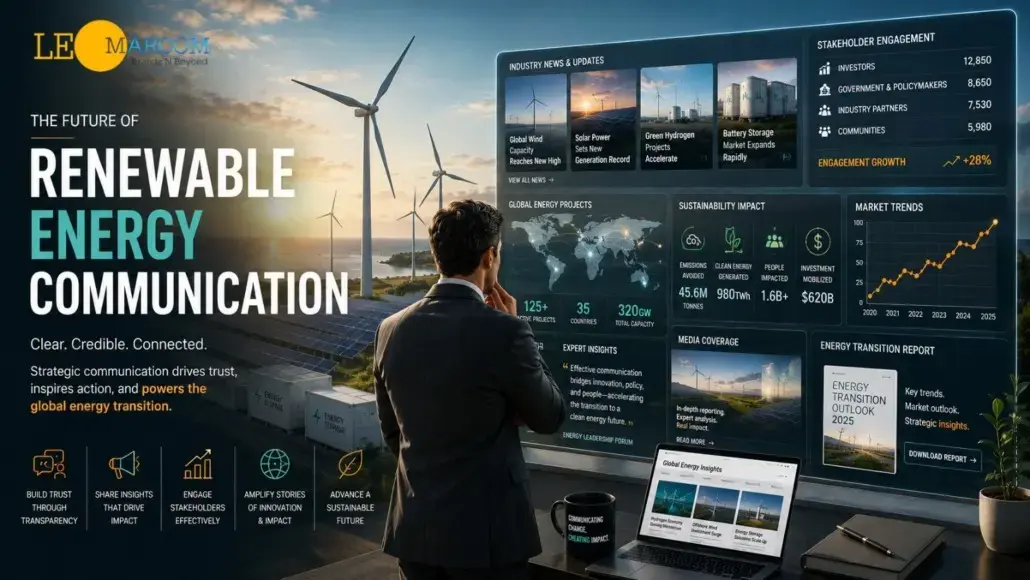
Renewable energy communication is becoming one of the most strategically important functions in the global energy transition. As governments, businesses, and investors accelerate the shift away from fossil fuels, the ability to communicate clearly, credibly, and consistently about renewable energy developments has never been more critical.
Consequently, energy companies, policymakers, and industry media platforms that invest in strong communication strategies will play a defining role in shaping public understanding, investor confidence, and policy direction in the years ahead.
Why Renewable Energy Communication Is Evolving
The renewable energy sector is growing at an unprecedented pace. Solar, wind, hydrogen, and battery storage technologies are advancing rapidly — and the volume of news, data, and expert analysis being generated is growing with them.
Furthermore, audiences engaging with renewable energy content are becoming more sophisticated. Investors, procurement heads, government bodies, and industry professionals all require accurate, in-depth, and timely information to make high-stakes decisions. Therefore, surface-level communication is no longer sufficient — depth, accuracy, and genuine expertise are now the baseline expectation.
Digital Media Is Leading the Conversation
Digital platforms have become the primary channel through which renewable energy communication reaches professional audiences. Industry-specific publications, expert newsletters, LinkedIn content, video explainers, and digital reports are now the go-to sources for energy sector professionals seeking reliable market intelligence.
Moreover, digital media enables real-time coverage of policy announcements, technology breakthroughs, project milestones, and market shifts — keeping global audiences informed at the speed the industry demands. As a result, energy businesses that maintain a strong digital media presence are better positioned to influence industry narratives and build authority within their markets.
Platforms like Power Info Today — a leading source of power generation industry intelligence — are already tracking how digital-first communication strategies are being adopted by energy companies seeking to build credibility with investors and procurement partners simultaneously.
Storytelling Drives Stakeholder Engagement
Data and technical reports alone do not build trust or inspire action. Renewable energy communication that combines factual accuracy with compelling storytelling reaches broader audiences, generates stronger engagement, and builds lasting brand credibility.
In addition, project success stories, community impact narratives, and innovation spotlights humanize the energy transition — making complex technologies and policy frameworks accessible to wider professional and public audiences. Businesses that communicate their renewable energy journey with clarity and purpose consistently attract stronger investor interest, better partnership opportunities, and greater stakeholder support.
Transparency and Credibility Are Non-Negotiable
Greenwashing — the practice of overstating environmental credentials — has damaged the credibility of numerous energy brands in recent years. Therefore, renewable energy communication in the future must be grounded in transparency, verified data, and honest reporting.
Audiences are increasingly discerning. Investors, regulators, and industry professionals can identify inflated claims quickly. Consequently, companies that communicate with integrity and back their messaging with credible evidence will build far stronger and more durable reputations than those that prioritise appearance over substance.
The Role of Industry Media in Renewable Energy Communication
Credible industry media platforms play a central role in shaping how the energy sector communicates with its professional audiences. Publications dedicated to power generation, construction, and industrial sectors provide the verified, expert-driven content that decision-makers depend on.
For professionals operating across the broader energy and infrastructure landscape, Power Info Today and World Construction Today offer in-depth industry intelligence that supports businesses communicating across the full energy transition spectrum.
Conclusion
Renewable energy communication is not just a marketing function — it is a strategic enabler of the global energy transition. Companies that communicate with expertise, transparency, and consistency will lead the conversation, attract the right partners, and build the credibility that drives long-term growth.
At Leo MarCom, we help renewable energy and industrial brands build expert-driven communication strategies that reach the professional audiences that matter most. Visit leomarcom.com to learn more.