


Factories and inventory used to define company value. That balance sheet has quietly flipped. Expertise-driven marketing now shapes how much a company is actually worth, often more than its physical assets ever did.
Why Expertise-Driven Marketing Reflects Real Company Value
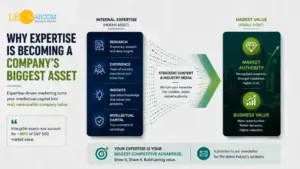
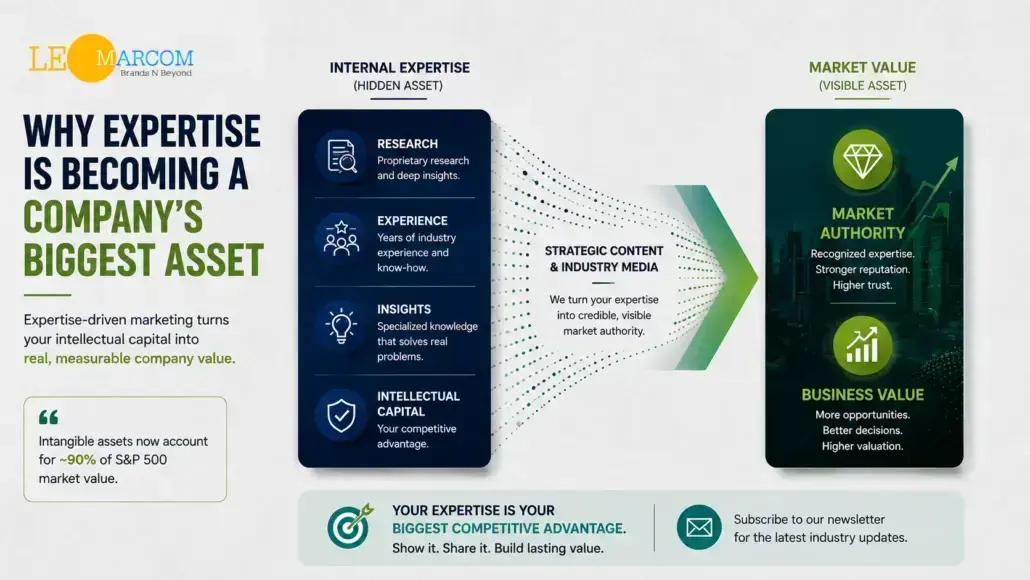
According to Ocean Tomo’s Intangible Asset Market Value study, intangible assets now account for roughly 90% of S&P 500 market value. Knowledge, reputation and expertise sit inside that intangible category. Companies that fail to showcase their expertise are quietly undervaluing what they actually own.
Consequently, this kind of marketing does more than generate leads. It signals the depth of intellectual capital a company holds, which buyers and investors both notice.
What Intellectual Capital Actually Includes
Intellectual capital covers proprietary research, specialized knowledge and accumulated industry experience. Most companies possess far more of this than their marketing ever reveals. Therefore, publishing that expertise turns a hidden asset into a visible, measurable advantage.
This differs sharply from generic promotional content. Buyers can tell when expertise is real versus repackaged industry commentary. Genuine intellectual capital shows up as specificity, not broad claims dressed up as insight.
How Industry Media Showcases Expert Content Strategy
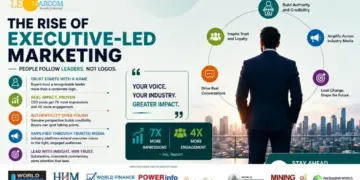
A pharma company publishing research through worldpharmatoday.com turns internal knowledge into visible market authority. Similarly, a healthcare brand featured on hhmglobal.com demonstrates expertise a generic press release cannot capture.
The same principle applies elsewhere. A finance firm featured on worldfinanceinforms.com or an energy company covered on powerinfotoday.com converts internal expertise into recognized market value.
Building Expertise-Driven Marketing Across Every Industry
Telecom brands can showcase this strength through teleinfotoday.com, while construction and mining firms build it via worldconstructiontoday.com and miningfrontier.com. Packaging companies gain similar recognition through packagingworldinsights.com.
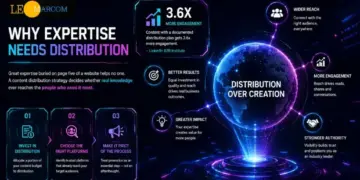
Start by identifying knowledge your teams already hold but rarely publish. Next, turn that internal expertise into structured, public-facing content. Additionally, distribute it through platforms where buyers already look for credible insight.
Conclusion
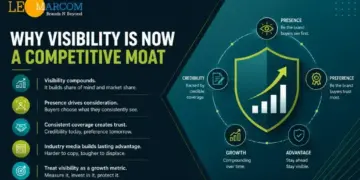
Expertise-driven marketing treats knowledge as a real business asset, not just supporting content. Companies that showcase their intellectual capital deliberately build value competitors cannot easily replicate. That asset compounds long after any single campaign ends.
At Leo MarCom, we help pharma, healthcare, energy, telecom, finance, construction, mining and packaging brands turn their intellectual capital into expertise-driven marketing that builds lasting company value. Subscribe to our newsletter to get the latest industry updates.