





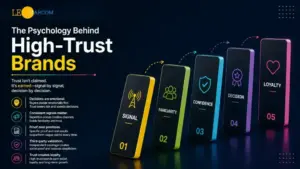
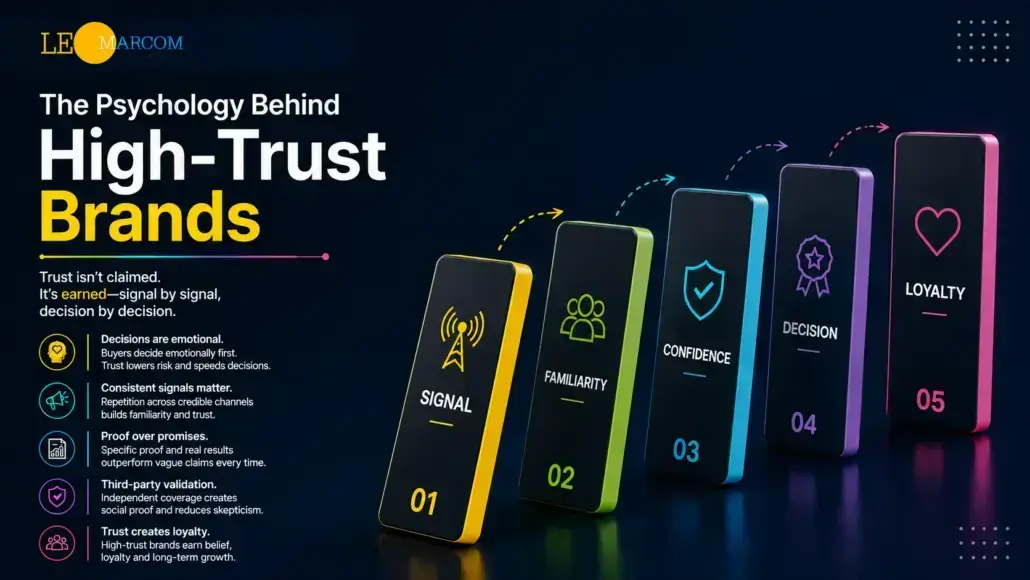
Trust is not an accident. High-trust brands earn belief through repeated, deliberate signals, not clever slogans or bigger ad budgets. Understanding the psychology behind trust explains why some companies win loyalty while others stay forgettable.
Why High-Trust Brands Outperform Louder Competitors
According to the 2026 Edelman Trust Barometer, 88% of people say trusting a brand is an important or critical purchase factor, on par with quality and value. That places trust alongside the two attributes marketers already obsess over. However, most companies still invest far less in building it deliberately.
High-trust brands understand that buyers make emotional decisions first and justify them logically afterward. Consequently, trust signals work by reducing perceived risk before logic even enters the conversation. A buyer who feels safe moves faster toward a decision.
What Trust Signals Actually Influence
Trust signals include consistent messaging, visible expertise and independent validation from sources a buyer already respects. Humans are wired to trust what feels familiar and socially confirmed. Therefore, repetition across credible channels matters as much as the message itself.
Specific proof outperforms vague reassurance every time. A named case study with real numbers builds more confidence than a generic promise of excellence. Buyers instinctively question claims that sound too polished to verify.
How Third-Party Validation Builds Psychological Trust
A pharma company featured on worldpharmatoday.com benefits from the same social proof effect that shapes personal relationships. Similarly, a healthcare brand covered on hhmglobal.com gains credibility that self-published content cannot replicate alone.
The same principle applies elsewhere. A finance firm featured on worldfinanceinforms.com or an energy company covered on powerinfotoday.com earns trust through recognized, independent sources.
Building High-Trust Brands Across Every Industry
Telecom brands can strengthen this credibility through teleinfotoday.com, while construction firms build it via worldconstructiontoday.com. Mining and packaging companies gain similar advantages through miningfrontier.com and packagingworldinsights.com.
Start by identifying where your brand relies on claims instead of proof. Next, replace vague language with specific, verifiable evidence. Additionally, pursue coverage from sources buyers already trust independently.
Conclusion
High-trust brands are not built through louder marketing alone. They are built through consistent, credible signals that align with how people naturally decide who to believe. Understanding that psychology gives brands a real, lasting advantage.
At Leo MarCom, we help pharma, healthcare, energy, telecom, finance, construction, mining and packaging brands build the high-trust brand presence and credible trust signals that turn attention into loyalty. Subscribe to our newsletter to get the latest industry updates.