






Business journalism in the AI era is undergoing one of the most significant transformations in its history. Artificial intelligence is changing how stories are researched, written, distributed, and consumed — and the media organizations that understand this shift are already adapting their editorial strategies accordingly.
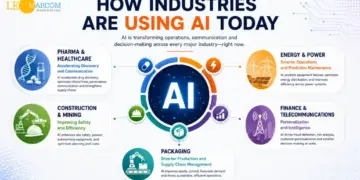
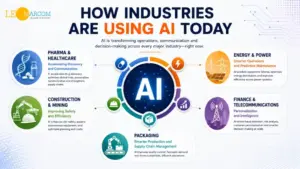
In fact, for industries that depend on accurate, timely, and expert-driven reporting — pharma, energy, healthcare, finance, and manufacturing — the future of business journalism has direct implications for how decisions are made and how trust is built.
How AI Is Changing Business Journalism
AI tools are already being used across newsrooms and digital publications to automate routine reporting, analyse large data sets, personalize content delivery, and identify emerging industry trends faster than any human team could alone.
Consequently, journalists and editors are now able to focus more time on investigative reporting, expert analysis, and in-depth storytelling — the areas where human judgment, experience, and industry knowledge are irreplaceable. Furthermore, AI-powered search and content tools are making it easier for audiences to find relevant industry news quickly, increasing the overall demand for high-quality business content.
The Risk: Accuracy and Editorial Integrity
Business journalism in the AI era faces a critical challenge — maintaining accuracy and editorial integrity when content can be generated at unprecedented speed and scale. AI tools can produce large volumes of content quickly, but without human oversight, errors, biases, and misinformation can spread just as fast.
Therefore, the most trusted business journalism platforms will be those that combine AI efficiency with rigorous editorial standards and genuine subject matter expertise. In regulated industries like pharma and energy, where inaccurate reporting can have serious consequences, this distinction is not just editorial — it is essential.
Personalization and Audience Engagement
One of the most significant opportunities AI brings to business journalism is personalization. Modern readers no longer consume industry news passively — they expect content that is directly relevant to their sector, role, and business challenges.
Moreover, AI enables media platforms to deliver personalized content experiences at scale — recommending articles, tailoring newsletters, and surfacing insights based on individual reader behaviour. As a result, business publications that leverage AI effectively will build deeper audience relationships and stronger reader loyalty over time.
Human Expertise Remains the Differentiator
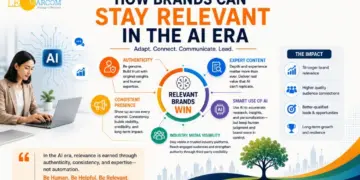
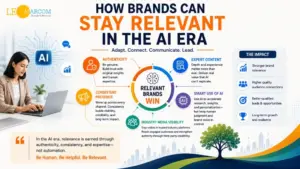
Despite AI’s growing capabilities, the future of business journalism in the AI era still depends on human expertise. Readers turn to industry publications not just for information — but for interpretation, context, and analysis that only experienced journalists and subject matter experts can provide.
In addition, source relationships, investigative instinct, and editorial judgment cannot be automated. The publications that will lead in the AI era are those that use technology to work faster and smarter — while keeping expert human voices at the centre of every story.
According to Reuters Institute, audience trust in AI-generated content remains significantly lower than trust in editorially verified journalism — reinforcing the enduring value of human-led reporting.
Conclusion
Business journalism in the AI era is not disappearing — it is evolving. The publications and media brands that combine AI-powered efficiency with editorial integrity, human expertise, and deep industry knowledge will define the next chapter of professional media.
At Leo MarCom, we operate a network of expert-driven, industry-specific digital publications across pharma, healthcare, energy, construction, and manufacturing — built for the professionals who depend on accurate, trusted business journalism. Visit leomarcom.com to learn more.