









AI tools can draft a post in seconds, but the draft is only as good as the instruction behind it. Prompt writing is the skill of giving clear, complete instructions, and it now belongs in every social media manager’s toolkit. Better AI prompts mean fewer rewrites and a voice that sounds like your brand.
According to The 2025 Sprout Social Index, 97% of marketing leaders say it is critical that their teams know how to use AI. Knowing the tool is not enough. Teams also need to know how to brief it.
Why Prompt Writing Matters for Social Teams
A vague request gets a vague answer. “Write a LinkedIn post about our new service” produces generic copy that any brand could publish. As a result, managers spend more time fixing than creating.
A strong brief does the opposite. It gives the tool enough context to produce a useful first draft. Moreover, it keeps your tone and facts under your control.
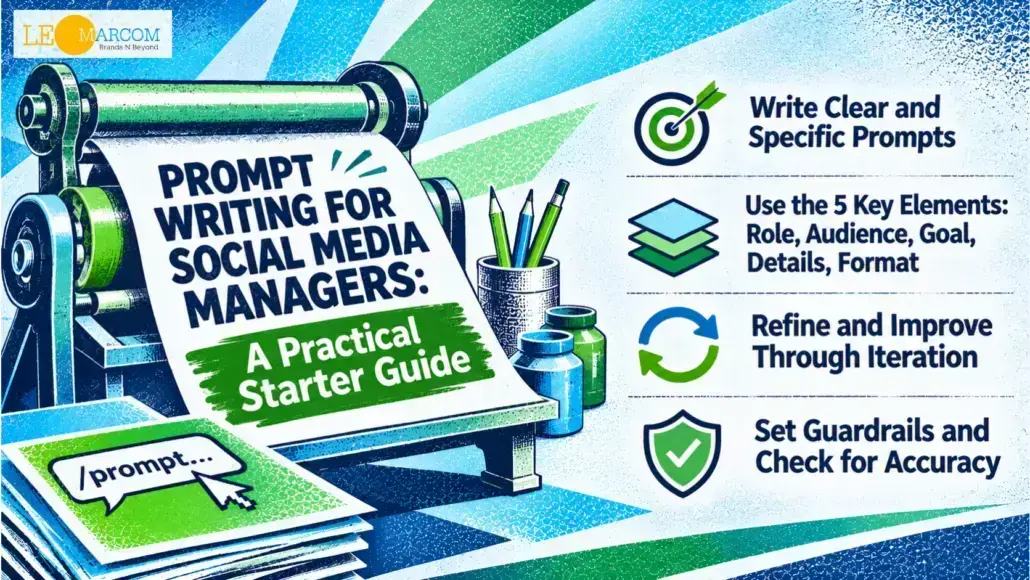
The Five Parts of a Good Prompt
Include these five elements in every request:
- Role: who the AI should act as, such as a B2B content writer.
- Audience: who will read the post and what they care about.
- Goal: what the post should achieve.
- Details: the facts, points and examples to include.
- Format and tone: length, structure and style rules.
Here is a simple example: “Act as a B2B content writer. Write a LinkedIn post for plant managers about preventive maintenance. Open with a question and keep it under 120 words. Use plain language and no hashtags.”
Improve Your Prompt Writing Through Iteration
Treat the first answer as a draft. Then refine with short follow-ups, such as “make the opening sharper” or “remove the jargon”. Keep the versions that work and save them.
Likewise, give the tool a sample of your best past post. Ask it to match the voice. This step alone often improves results more than any other.
Set Guardrails Before You Publish
Never paste confidential client data or unreleased news into a public AI tool. Check every fact, figure and claim yourself. In regulated sectors, route posts through your usual review.
Finally, edit for a human voice. Add a real example or a personal view that only your team could write.
Conclusion
Good prompts are clear, specific and tested. Brief the tool with a role, audience, goal, details and format, then refine and edit. Build a small library of prompts that work and share it with your team.
At Leo MarCom, we help B2B industries use AI with a clear process so their social content stays accurate and human. Subscribe to our newsletter to get the latest industry updates.